Protective Masks: Essential Guide to Their Correct Use
Complete guide on the types of protective masks (FFP, surgical, hygienic) and best practices for their use, essential for safety at work.
· 6 minutos · Segurança no Trabalho
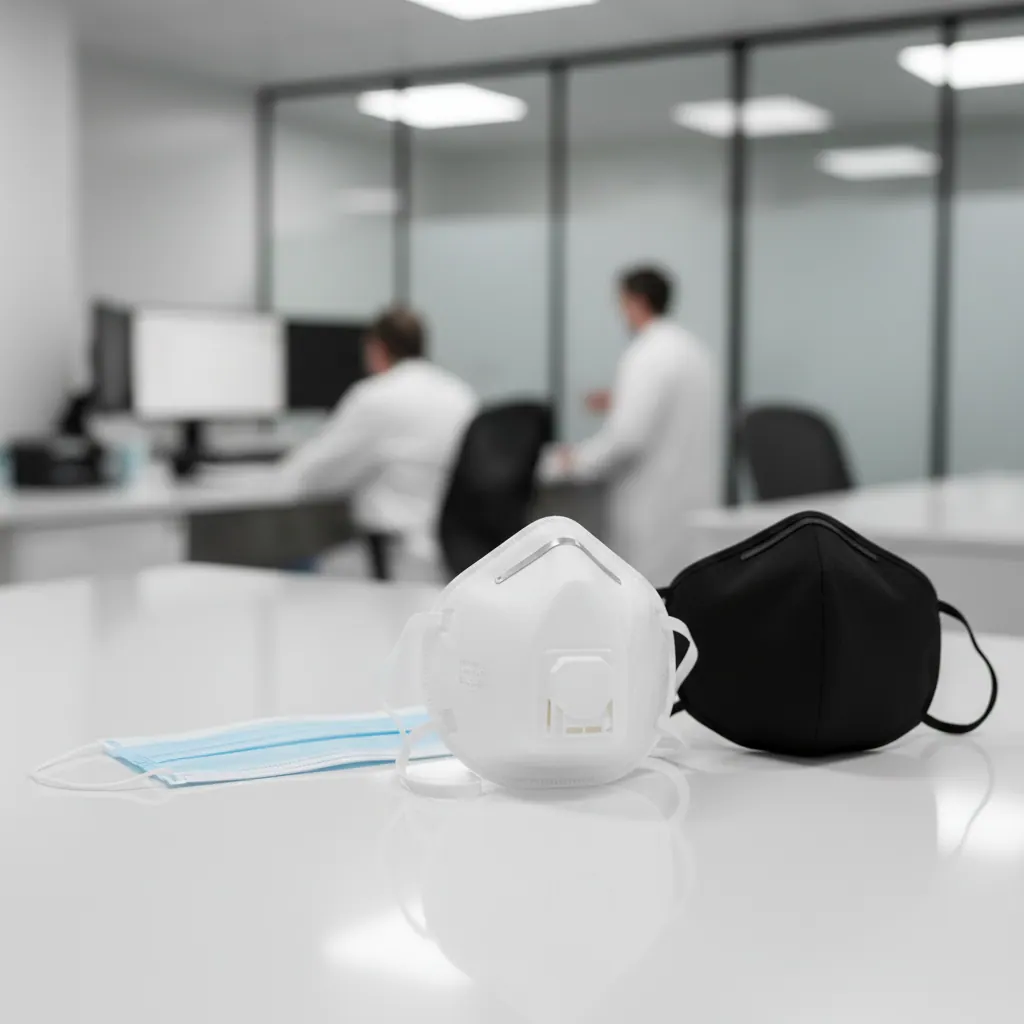
During the COVID-19 pandemic, the use of protective masks became a fundamental public health measure. Their correct use is essential to prevent the spread of viruses, such as SARS-CoV-2. It is important to understand the different types of masks and their specific characteristics to ensure effective protection.
Types of Masks and Their Protection
There are mainly three types of masks used for respiratory protection:
- FFP (Filtering FacePiece) respiratory protection masks
- Surgical masks
- Hygienic masks
Choosing the appropriate mask depends on the environment and the level of protection required. It is essential to know the nature of the contaminant and how it spreads. In the case of SARS-CoV-2, it is known to be transmitted through respiratory droplets of about 5 microns, which do not float in the air but settle, and can be dispersed by speaking, coughing or sneezing, and influenced by air currents.
FFP-Type Respiratory Protection Masks
FFP masks are Personal Protective Equipment (EPI) and are certified according to the European standard EN 149. This standard tests protection from the external environment to the mouth and nose, i.e. "inward protection".
There are three levels of protection:
- FFP1: Minimum protection.
- FFP2: Intermediate protection.
- FFP3: Highest level of protection.
Some FFP2 masks and most FFP3 masks have an exhalation valve that makes it easier for the user to breathe, reducing resistance to outgoing air. This valve does not compromise the inward protection of the mask.
The maximum continuous use time for an FFP mask is 2 hours, with a rest period of at least half an hour recommended between consecutive uses.
Surgical Masks
Surgical masks are medical devices certified according to the European standard EN 14683. Its certification test assesses protection from the user's mouth and nose to the external environment, i.e. "outward protection". They are designed to reduce the risk of spreading infections, particularly in epidemic or pandemic scenarios.
They are divided into three types:
- Type I: Intended to reduce the spread of infections.
- Type II and IIR: Used by healthcare professionals in environments such as operating theatres, offering greater protection.
The EN 14683 standard does not specify a maximum continuous use time for surgical masks, but it is advisable to change them when they become damp or visibly dirty.
Hygienic Masks
Hygienic masks function as a physical barrier that hinders the contact of respiratory droplets with the mouth and nose. These masks do not have formal CE certification for respiratory protection, but they must comply with established technical specifications. In Portugal, the DGS issued guidelines for their production and use in non-clinical contexts, aiming to complement other preventive measures.
There are guidelines for their manufacture, which classify them by reusability and the age group they are intended for:
- Non-reusable for adults and children
- Washable for adults and children
Dual Masks and Mask Choice
There are also "dual" masks that combine the protective characteristics of FFP and surgical masks, offering protection both "inward" and "outward".
The choice of mask type should be based on the environment of use:
- If everyone in the environment is wearing a mask, a surgical mask may be sufficient.
- If widespread mask use is not guaranteed, it is preferable to opt for FFP2 or FFP3 masks.
- Hygienic masks are a last-resort solution, provided they comply with the applicable technical specifications.
Correct Use and Recommendations
To ensure the effectiveness of the mask, it is crucial to follow the manufacturer's instructions regarding donning and doffing, as well as to respect the maximum use time. FFP masks have two elastic straps that must be positioned at the back of the neck and the top of the head for a secure fit. Surgical masks have ear loops and must be fitted tightly to the mouth and nose.
It should be remembered that masks are a complementary measure to other preventive actions, such as social distancing and hand hygiene. Health authorities recommend their use as part of a set of individual and collective protective measures.