Profesiograms in Occupational Risk Prevention
Profesiograms are crucial tools for managing occupational safety and health. This article details their application in aptitude assessment, risk identification, and job adaptation, promoting occupational health and legal compliance in Portugal.
· 5 minutos · Segurança no Trabalho
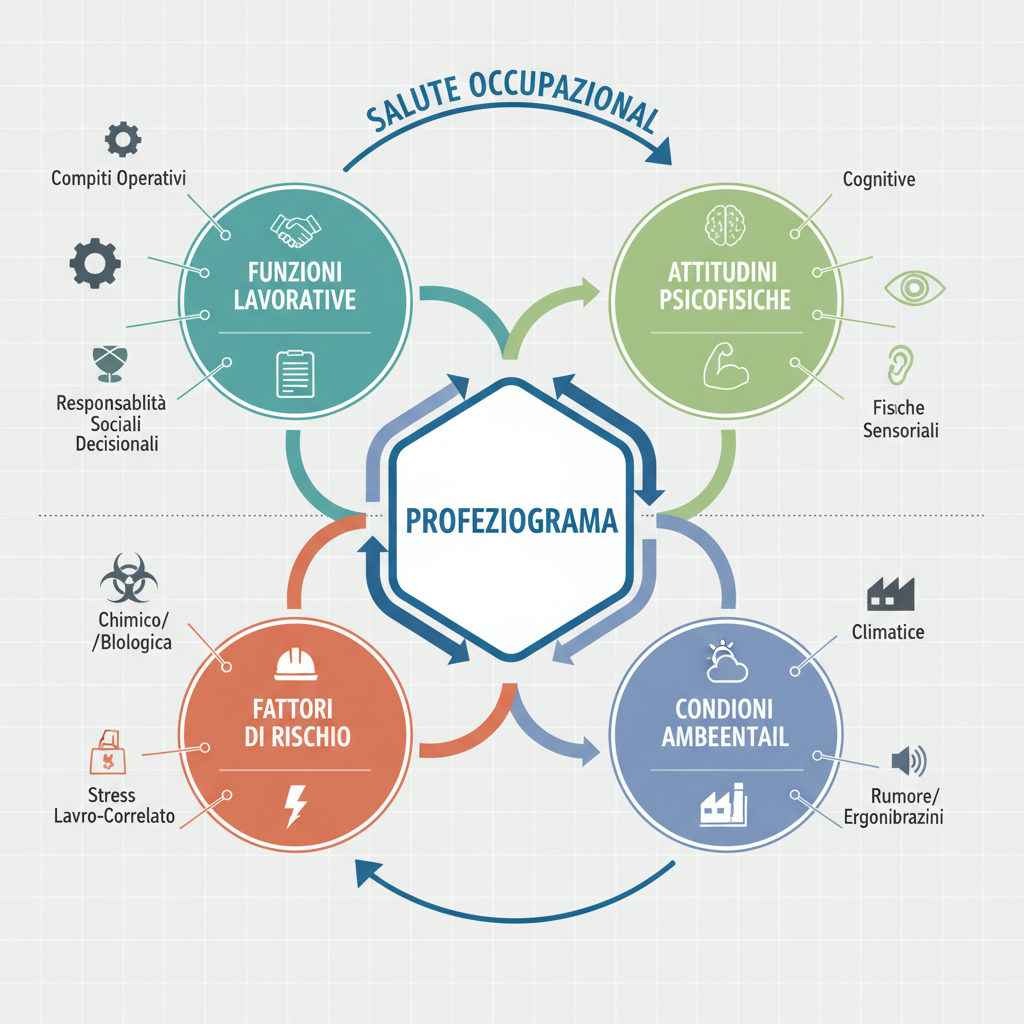
In general terms, a profesiogram is a document that describes a worker's functions in their job. It is a tool commonly used in human resources departments, and it is essential that it be as concise and detailed as possible. This document also collects the aptitudes and capabilities that the person must possess to perform the tasks.
In occupational risk prevention, the profesiogram is understood as a document that aims to identify the functions and tasks assigned to a job, the psychophysical aptitudes and faculties that the worker must possess to develop the required work activity in that job, as well as the possible risks derived from that activity and the specific circumstances of the work environment that may influence the work capacity of the workers occupying that job.
The functions can be designated as "competencies," and the psychophysical aptitudes and faculties as professional "requirements." In other words, it is about understanding the competencies and tasks performed by the worker and the requirements of the job. This information can serve as a basis for medical personnel to determine whether a worker's limitations allow or prevent the development of their work activity.
The assessment of a worker's work capacity requires the objectification of the organic and/or functional limitations that an injury or illness may have caused. However, it is equally essential to know the competencies and tasks performed and the requirements of the job, in order to determine whether these limitations prevent the worker from performing the work activity.
It is clear that there are pathologies whose nature and evolution lead to an incapacity for the development of any work activity. However, most pathological processes affect specific worker capacities, and in these situations, it is crucial to know the specific circumstances of each job.
Thus, it became necessary to develop a profesiogram through a work methodology that allows for the identification of the competencies and tasks assigned to the occupation or job, as well as the psychophysical aptitudes and faculties that the worker must possess to develop the required activity. This document must also provide information, from a preventive point of view, about the specific context where the tasks are developed, including possible risks and the material and environmental working conditions resulting from professional activity, which may influence workers' work capacity.
Usefulness of the profesiogram
The profesiogram can be developed for various reasons, the most common being knowledge of the specific circumstances of a job. However, it can also be used to:
- Guide medical recognition and the objectification of organic and functional limitations, according to the worker's occupational profile, in permanent disability and temporary disability processes.
- Facilitate decision-making (return to work, continuation of sick leave, or initiation of permanent disability process) in temporary disability processes and the qualification of the degree in permanent disability processes.
- Complement the job risk analysis in risk processes during pregnancy and during breastfeeding.
- Evaluate the possible occupational etiology of the pathological condition that the worker presents in any of the previous processes, and contribute to a homogeneous treatment in processes where it is necessary to determine contingency.