Safety and Health in Confined Spaces
Safety in confined spaces is crucial. This article explores essential guidelines to prevent accidents, ensure adequate training, and implement effective protection measures, in compliance with occupational safety and health standards in Portugal.
· 7 minutos · Segurança no Trabalho
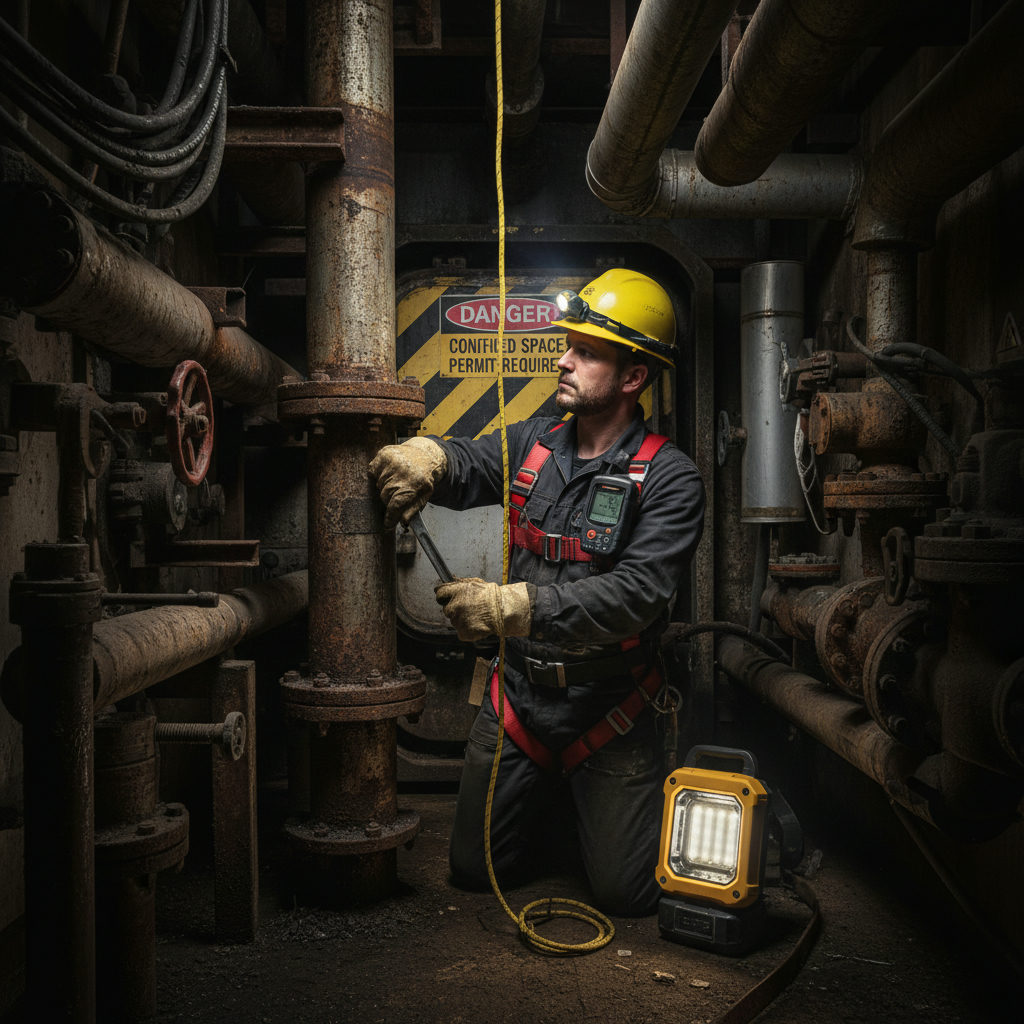
The execution of work in confined spaces has historically been a source of serious and fatal accidents. The absence of specific regulation, in many contexts, contributed to these tasks being carried out without due precautions. The principles and the need for regulation for work in confined spaces are universally recognized and covered by national OSH legislation. The objective is to create safe work environments, through the implementation of effective preventive and protective measures. This type of work requires a rigorous approach, based on training, planning, and continuous control, to safeguard the life and health of workers.## Impact of Regulation on OSH The introduction of specific regulation for work in confined spaces brought about significant changes, aiming to improve working conditions and reduce risks. Among the main impacts, the following stand out:
- Creation and strengthening of specialized training centers.
- Specialization of human resources to deal with this type of specific risk.
- Binding companies to comply with legal requirements. These measures allow companies to verify and determine the conditions of each space, assessing its dimensions and degree of dangerousness. It is fundamental that, after identifying the dangers, prevention and protection measures appropriate to the identified conditions are applied, reinforcing companies' actions in safeguarding the life and health of their employees.## Management Program for Work in Confined Spaces Risk management in confined spaces must begin with a design and documentation process that allows for the execution of planned activities. National occupational safety and health legislation establishes the duty to implement a management program for work in confined spaces. This program should be a structured tool to guide the management of these tasks. Its minimum structure should include:
- General objective.
- Scope of the program.
- Conceptual and legal framework.
- Roles and responsibilities.
- Hazard analysis, risk assessment and valuation, and establishment of controls to prevent harm to workers' health.
- Inventory, classification, and location of confined spaces.
- Documented procedure and annexes defined by the employer.
- Prevention measures.
- Protection measures.
- Procedures in case of emergency.
- Specific management indicators. This structure covers the necessary aspects to perform activities safely, mitigating the risks associated with these scenarios. Furthermore, the implementation of an administrative measure that requires formal authorization for each intervention is crucial. The entire process must be authorized through a work permit, which aims to verify the conditions and controls before the start of any work.
Work Permit in Confined Spaces
The process of working in confined spaces requires a formal permit that ensures the verification of all safety conditions. This document must include, at a minimum, the following points:
- Full names, signatures, and identification of authorized workers and people approving the permit.
- Date and time of start and end of the task.
- Description of the task.
- Self-assessment of working and health conditions.
- Verification of the existence of a procedure for the task.
- Preliminary Accident Analysis, including control measures and risk management (preventive and protective).
- Verification of the availability of personal protective equipment (PPE) selected by the employer, taking into account the risks and requirements of the task, in accordance with current legislation.
- Verification of atmospheric measurements prior to access.
- Tools and equipment to be used.
- Verification of certified training according to the function to be performed.
- Validity of the permit.
- Verification of emergency response.
- Observations. This premise of working in confined spaces is based on a phased logic, where planning is fundamental to ensure safety. Execution, supported by permanent supervision, gas measurement, and ventilation, is followed by an evaluation of the effectiveness of the controls and actions implemented, allowing for the determination of additional measures to maximize safety.
Requirements for Workers in Confined Spaces
To be able to perform functions in confined spaces, the worker must meet the following requirements:
- Possess specific occupational medical evaluation for confined spaces.
- Have specific certified training for confined spaces, according to the function performed.
- Have received training in specific procedures for the task.
- Inspect and use specific personal protective equipment (PPE).
- Perform gas measurement.
- If necessary, implement ventilation or extraction in the confined space.
- Complete the work permit in confined spaces.
- Be permanently accompanied.
- Implement the prevention and protection measures determined by the employer.
- Inspect all elements and equipment before being used in the activity.
- Report any unsafe condition detected in the confined space environment. Let's work together so that all those who dedicate their effort and talent in confined spaces can return home safely, enjoying the light of a risk-free tomorrow.