How to Address Professional Risk Prevention in High-Altitude Work
Learn about the effects of decreased oxygen, temperature, and increased solar radiation at high altitudes, and essential preventive measures to protect workers' health.
· 7 minutos · Segurança no Trabalho
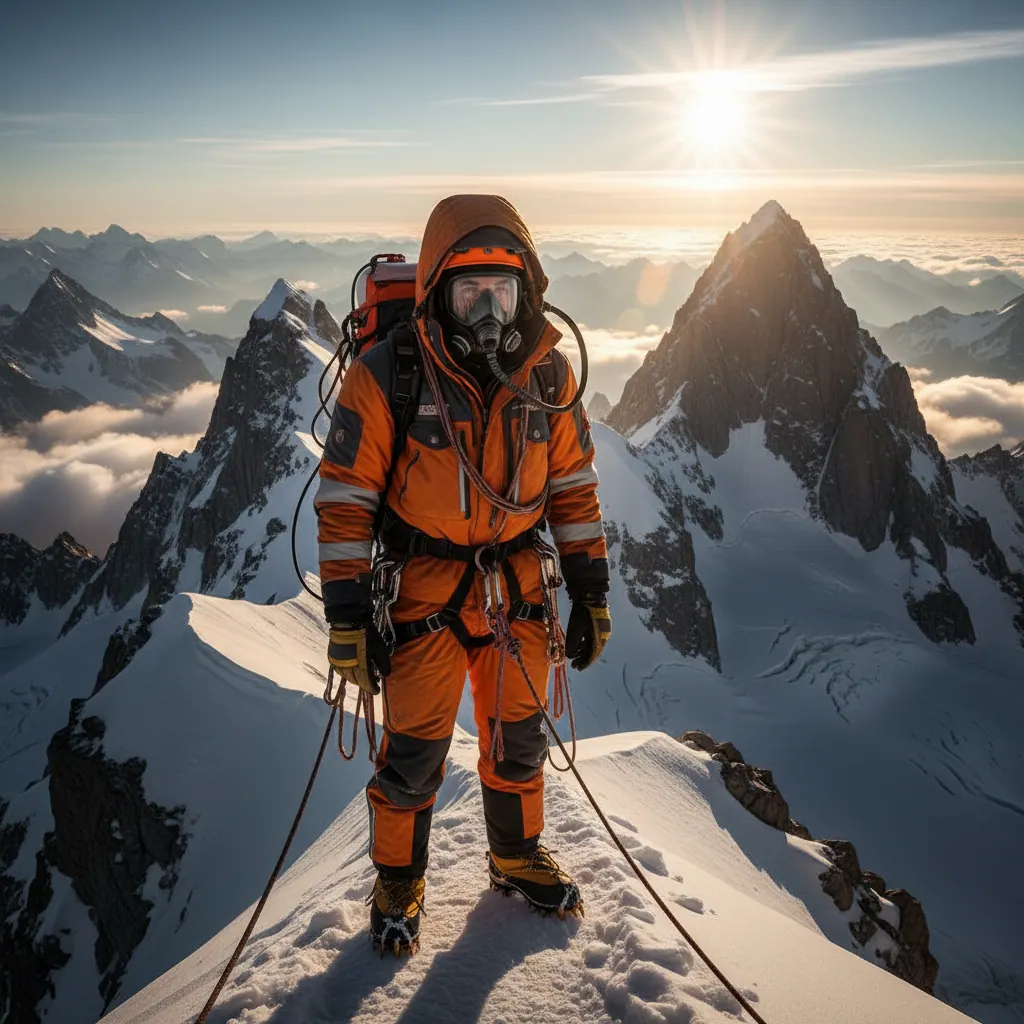
In many regions, it is common for a significant portion of the population to reside and work at altitudes exceeding 2,000 meters above sea level. This reality, driven by sectors such as mining and tourism, leads to the migration of professionals to high-altitude environments.
However, at geographical altitudes above 2,000 meters, specific climatic conditions arise that affect the organisms of people unaccustomed to working in these locations. Such conditions include a decrease in oxygen concentration in the air, a reduction in ambient temperature, and an increase in solar radiation.
These factors influence the physiological responses of the body, increasing the risk of severe alterations in susceptible workers. It is crucial for companies to consider these new professional risks in work carried out at high altitudes. In this context, it becomes crucial to understand the potential adverse effects of these climatic parameters on health, as well as the best prevention practices.
Decreased oxygen concentration
The higher the altitude, the lower the availability of oxygen, which causes changes in body systems and organs, generally the most affected due to the greater need for oxygen. The lack of oxygen forces the body to adapt, increasing heart rate and ventilatory volume. The success of these adaptation mechanisms depends on objective factors such as the altitude reached, environmental humidity, temperature, and ascent speed, among others. Subjective factors such as genetics, diet, hydration, and other individual characteristics also play a role.
If adequate compensation does not occur, symptoms of Acute Mountain Sickness (AMS) may appear, manifested by headaches, nausea, general malaise, and heart conditions. In more severe cases, exposure to altitude can lead to complications such as High-Altitude Pulmonary Edema (HAPE) and/or High-Altitude Cerebral Edema (HACE), which severely affect the lungs or brain. In these circumstances, the person must be immediately transported to a lower altitude.
Decreased temperature
Similar to oxygen availability, ambient temperature has an inversely proportional relationship to geographical altitude. It is estimated that the negative thermal gradient is 0.5 to 1°C per 100 meters of altitude. Considering that the human body needs to maintain a constant temperature of 36°C, exposure to cold can cause two types of adverse health effects:
- Acute effects: Local (frostbite of a limb) or general (attention deficit or spatial disorientation).
- Chronic effects: Lung, ear, or eye diseases or problems.
Increased solar radiation
Not only heat, but geographical location also influences the solar radiation we perceive. The higher the altitude of a place, the less the attenuation of solar rays by the atmosphere, so UV radiation is higher than at sea level. It is estimated that, for every 1 km of altitude, the intensity of solar radiation increases by between 13% and 15%.
For high-altitude workers, this represents a significant risk, as frequent exposure to solar radiation can cause severe skin damage, as well as changes in vision or the immune system.
Among the health effects of UV radiation are:
- Premature aging
- Peeling
- Skin lesions
- Sunburn
- Skin cancer (Melanoma and non-melanoma)
- Cataracts
- Pterygium (Conjunctival growth that can block vision)
- Macular degeneration (Part of the retina where visual perception is sharpest)
- Immunosuppression (Weakening of the immune system).
Best prevention practices
Given the professional risks associated with high-altitude work, it is crucial that companies operating or carrying out activities in high-altitude regions adopt preventive measures for the benefit of their employees. These measures include:
- Conducting pre-admission examinations to determine: a) moderate and severe alterations in respiratory functional capacity; b) evidence of hypertrophic cardiomyopathy; c) uncontrolled arterial hypertension; d) other examinations that prove fitness or unfitness for work at altitude.
- Keeping oxygen available in facilities or workplaces, if necessary.
- Adapting workstations to the characteristics of workers, to avoid excessive fatigue.
- Having qualified health personnel, necessary medical facilities, and means for transporting workers in serious cases.
- Minimizing direct outdoor exposure when the temperature is negative, using insulated and air-conditioned cabins. In case of outdoor work, having protective devices for the face and eyes.
- Paying attention to the caloric intake of food and providing hot food during working hours.
- Using UV eye protection and appropriate clothing to protect against UV radiation.
- Conducting periodic medical evaluations to detect possible skin and eye damage.
- Using helmets with neck protection.
- Using sunscreens with UV protection, suitable for each skin phototype, applied with the frequency determined by the worker's risk assessment.
Each organization must analyze all the mentioned risks in conjunction with the Occupational Health and Safety Department, and implement prevention and control programs, as well as Occupational Medical Surveillance. These programs are essential for the protection of workers' health and for the company itself.