Musculoskeletal Disorders: Non-Specific Shoulder Pain
Learn how to manage non-specific shoulder pain. This article covers the causes, symptoms and presents an exercise plan.
· 5 minutos · Segurança no Trabalho
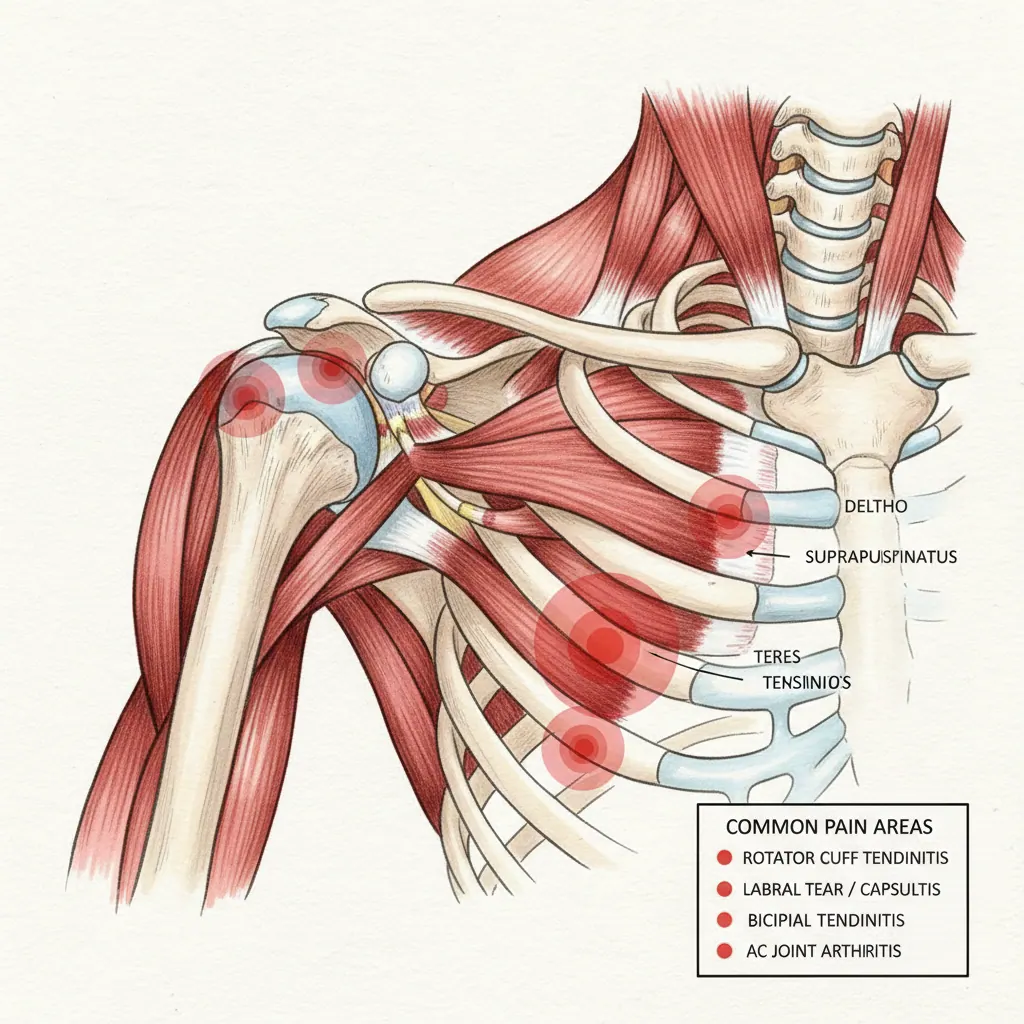
We continue the series of content dedicated to Musculoskeletal Disorders, focusing, this time, on the prevention of non-specific shoulder pain.
The Shoulder: A Complex Joint
The shoulder joint has a wide range of movement, which makes it inherently less stable from an osteoarticular point of view. This characteristic contributes to its susceptibility to problems.
Incidence and Causes of Shoulder Pain
Due to its tendency towards instability, the shoulder has a high incidence of pathologies in the population. These can be caused by inflammation, degenerative processes or traumatic events. It is estimated that approximately 20% of the population will suffer from shoulder pain at some point in their lives.
The causes of shoulder pain are diverse and the correct diagnosis must be made by a specialist, through anamnesis, physical examination and, if necessary, imaging tests.
Common Symptoms
Among the most common symptoms, pain that radiates to the arm and worsens with the movement of raising the arm above 90 degrees stands out.
Prevention and Exercises
In accordance with Article 131 of the Portuguese Labour Code, which establishes the mandatory nature of continuous vocational training, the promotion of occupational health and safety is fundamental. Although non-specific shoulder pain may not be directly addressed in the legislation with a specific article, the prevention of occupational diseases and the promotion of workers' well-being are unequivocally the responsibilities of both the employer and the worker themselves.
Below, we present an exercise plan that has proven effective in reducing or preventing non-specific shoulder pain. Its regular practice contributes to the maintenance of musculoskeletal health, a crucial aspect of productivity and quality of life at work.
- Exercise 1: External rotation with resistance band.
- Exercise 2: Front raise with light dumbbells.
- Exercise 3: Scapular adduction with resistance bands.
- Exercise 4: Pectoralis major stretch.
- Exercise 5: Posterior shoulder capsule stretch.
Note: Before starting any exercise programme, it is essential to consult a healthcare professional to ensure that the exercises are suitable for your specific condition.