Occupational Risk Prevention for First Aiders
This article addresses the specific risks of the first aider profession, from environmental factors to psychosocial risks, and presents crucial preventive and protective measures, in line with the Portuguese Labour Code.
· 6 minutos · Segurança no Trabalho
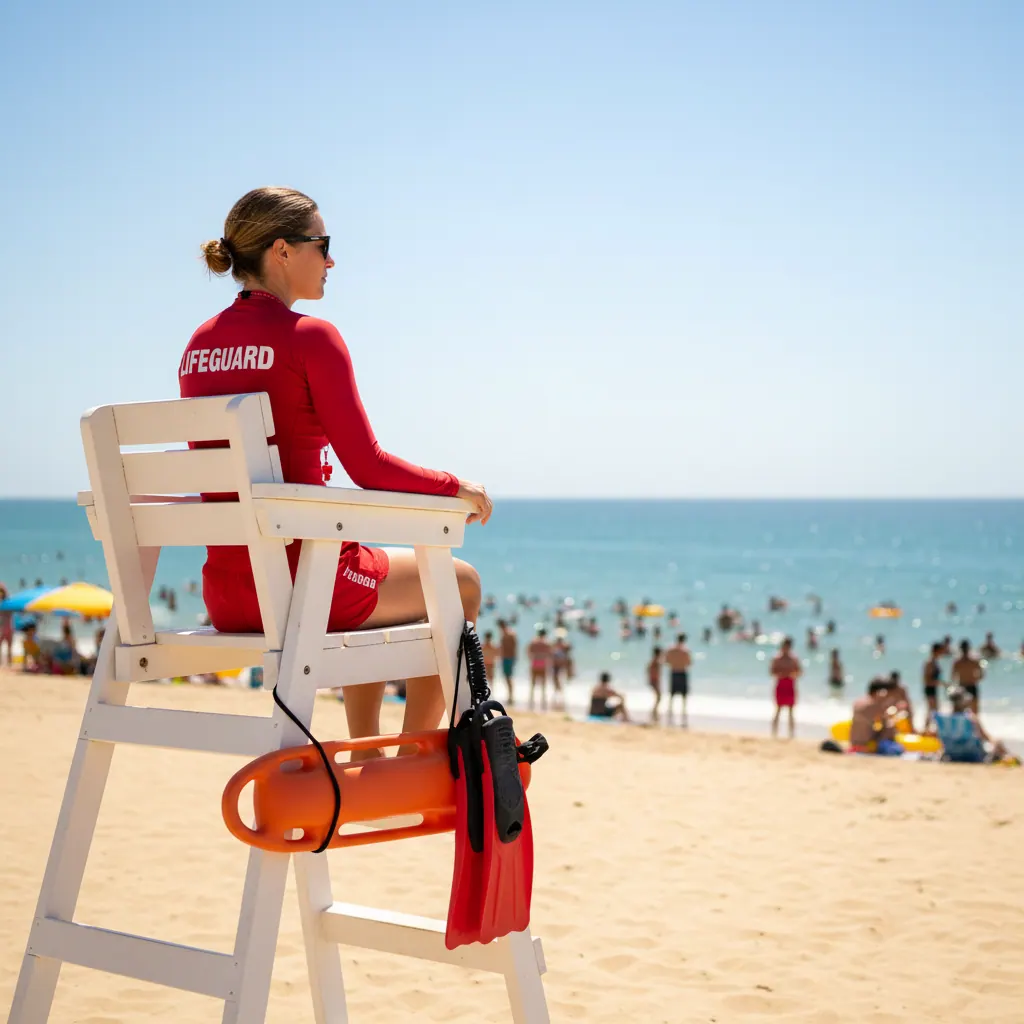
Lifeguards play a crucial role during the bathing season on beaches and in swimming pools, ensuring the protection and safety of users. Although the activity may seem relaxed, it is far from being free of risks to the safety and health of these professionals, given the characteristics of the facilities, the environmental conditions to which they are exposed, as well as the musculoskeletal and psychosocial risks arising from the responsibility inherent to the role and from stressful situations.
Main occupational risks for lifeguards
Among the main risks to which lifeguards are exposed, the following stand out:
- Falls on the same level: common in wet areas.
- Falls from height.
- Overexertion: when handling accident victims and adopting awkward postures.
- Exposure to extreme environmental conditions: heat, cold, humidity and solar radiation.
- Biological agents: protozoa, fungi, bacteria and viruses.
- Chemical agents: disinfectants, algaecides, chlorine, etc., particularly in swimming pools.
Psychosocial risks and the importance of prevention
With regard to psychosocial risks, lifeguards must maintain a state of constant attention and vigilance, which requires permanent alertness, often associated with long working hours under environmental conditions that can be extreme. Additionally, conflicts with users who do not comply with established safety rules are common.
In view of the above, it is essential that, in addition to protecting others, lifeguards protect themselves. Below, we indicate a set of basic prevention and protection measures to be taken into consideration and applied.
Essential preventive and protective measures
- Suitable footwear: Use work footwear with non-slip soles that allow the foot to remain dry and have a good heel grip, to prevent slips and falls.
- Safety on surveillance chairs: Ensure the good condition and stability of high chairs before using them. When climbing up and down, hold on with both hands and avoid jumping.
- Sun protection: Have shaded areas available and use parasols or awnings on surveillance towers. Limit sun exposure, especially during peak hours. Apply sunscreen periodically and use sunglasses with side protection, t-shirts and hats.
- Hydration and heatstroke prevention: Drink plenty of fresh water frequently and avoid remaining still for long periods; move around, but avoid intense physical exertion during the hottest hours. Cool off with water and, at the slightest sign of dizziness, inform a colleague.
- First aid and hygiene: When providing care, use protective gloves, discard sharps in appropriate containers and make sure to wash your hands after treatments and before eating. Only consume water with guarantees of potability.
- Handling of chemical products: Consult the safety data sheets of chemical products and follow the instructions for their handling and for the use of personal protective equipment.
- Transport techniques and physical fitness: Apply the most appropriate transport technique when moving injured persons, use the available means and maintain good physical fitness.
- Posture and breaks: Alternate postures, avoiding standing statically for long periods. Do stretches before and after work sessions and during working hours, as well as taking regular breaks.
- Conflict management: In the event of disagreement or confrontation with users, remain calm and emotionally balanced, speak in a polite and friendly manner, and do not give in to provocations.
- Combating mental fatigue: Adequately distribute rest periods throughout the working day and adopt relaxation techniques.
Compliance with these measures is essential for the safety and health of lifeguards, ensuring the appropriate legal framework for continuous vocational training, as provided for in Article 131 of the Portuguese Labour Code.