Training for the Safe Use of Diisocyanates
Discover the importance of training in the safe use of diisocyanates. This article details the hazards, applicable occupational safety and health legislation, and training requirements for workers exposed to these chemical compounds.
· 5 minutos · Segurança no Trabalho
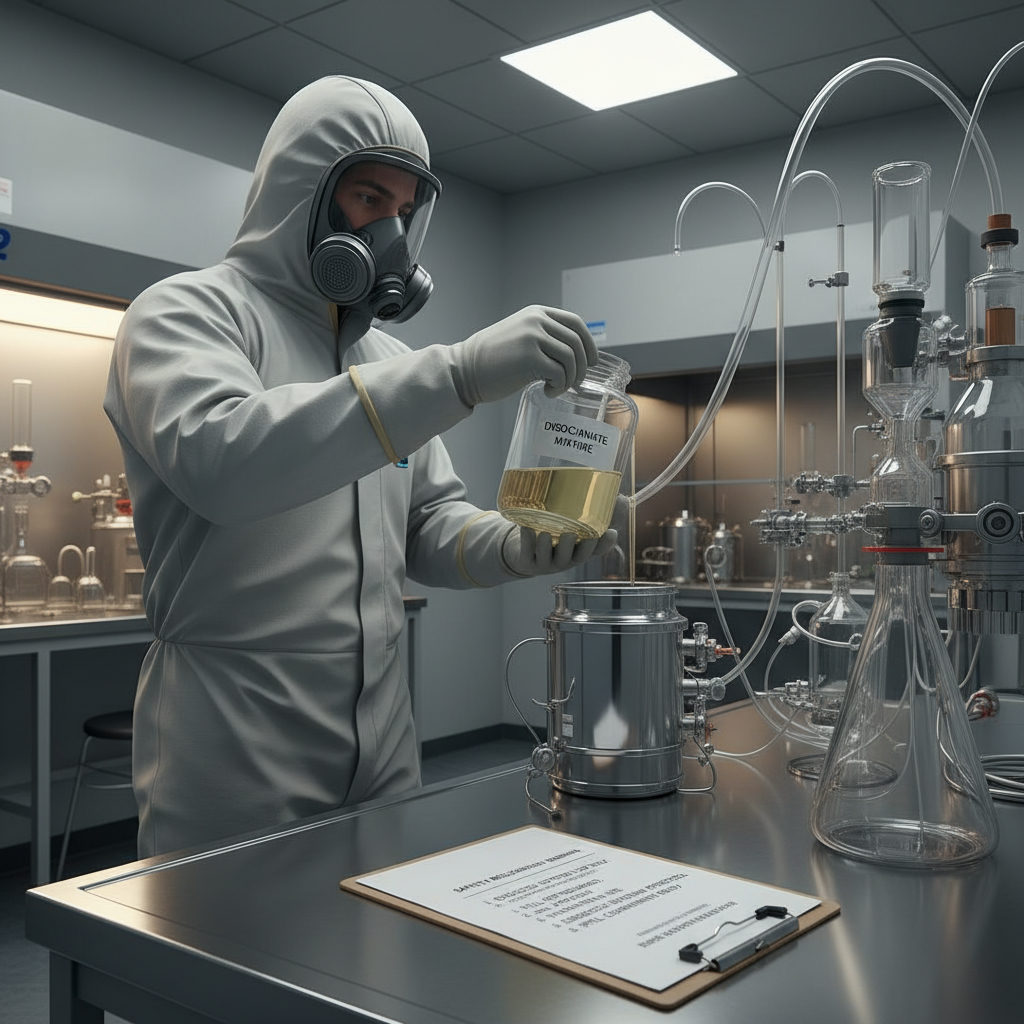
Diisocyanates are organic compounds widely used in the manufacture of polyurethane products such as rigid and flexible foams, coatings, adhesives, sealants, and elastomers.
Exposure to diisocyanates occurs during the application and handling of liquid or pasty polyurethane products, regardless of whether they are applied with a spray gun, brush, or roller.
These activities are carried out in a wide variety of industrial sectors, such as the furniture, automotive, naval, pharmaceutical, or phytosanitary industries, among others.
However, diisocyanates are not present in finished and cured polyurethane products after their application.
Health Hazards of Diisocyanates
Diisocyanates are respiratory sensitizers, being dangerous if their vapors, mists, or fumes are inhaled, as they can cause hypersensitivity of the respiratory tract. They are also skin sensitizers, and skin contact can induce an allergic reaction.
Legislation and Mandatory Training
Legislation on diisocyanates in the European Union, specifically Regulation (EU) 2020/1149, establishes restrictions and requirements for the safe use of diisocyanates in industrial and professional products. As of August 24, 2023, the use of diisocyanates in industrial and professional products is prohibited without adequate training on safe use. Mandatory training is required for all professional and industrial users exposed to diisocyanates in concentrations greater than 0.1% by weight.
Diisocyanate Training Requirements
Training must be renewed every five years and is divided into three modalities (general, intermediate, and advanced), depending on the risk level of the application.
The training is valid for 5 years, after which it must be renewed.
Since February 24, 2022, manufacturers of polyurethane products must include this training requirement on the labeling of their respective products.
Diisocyanate Training Content
The legislation establishes a general basic course, applicable to all who work with diisocyanates. Depending on the activity and working conditions, more specific and advanced training may be required.
The topics covered in the basic training include:
- Chemical aspects of polyurethanes
- Exposure situations and health damage
- Occupational exposure limit values
- Risks associated with polyurethane application processes
- Measures and action protocols for skin and inhalation protection
This training is crucial to ensure occupational safety and health and compliance with legal obligations, protecting workers from the risks associated with handling diisocyanates.