When working as a courier can cost your life
Discover the main health and safety risks for couriers and the preventive measures to ensure their protection, including adaptations to Portuguese occupational safety legislation.
· 10 minutos · Segurança no Trabalho
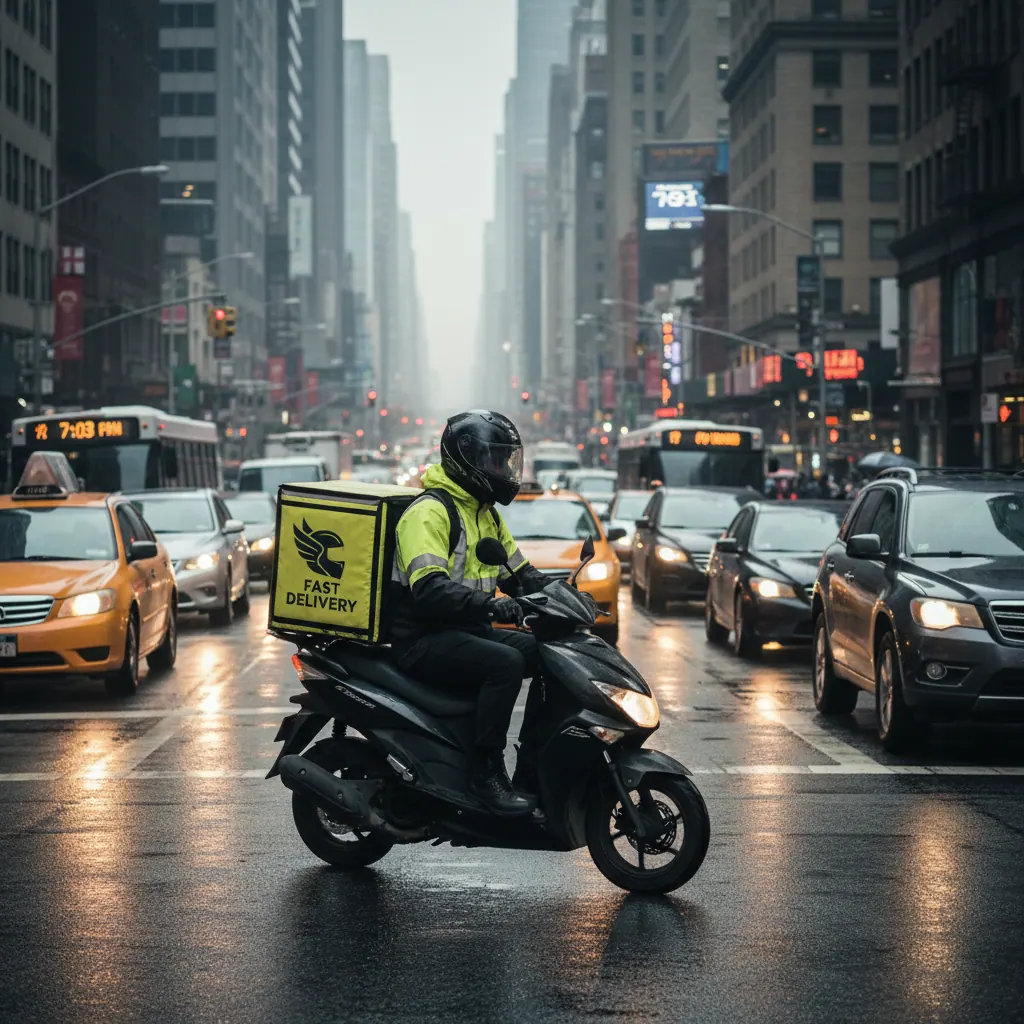
The profile of the courier is that of a young person, between 18 and 35 years old, who delivers, on a part-time or full-time basis, products from all types of businesses – not just catering – by bicycle or motorbike, using a large backpack on their back and, frequently, working simultaneously for several platforms.
Working and being paid "by the piece" exerts enormous pressure on couriers, which is worsened by continuous geolocation by both the company and the customer. This implies that they travel very quickly through our cities, resulting in a higher probability of occupational accidents.
Main risks for couriers
In addition to traffic accidents and falls, couriers are exposed to other occupational risks that may go unnoticed:
- Musculoskeletal problems due to the manual handling of the loads transported and unsuitable postures while riding.
- Respiratory problems resulting from city pollution and exposure to exhaust fumes from cars and buses. It has been shown that couriers absorb more than 50% more toxic gases than other road users.
- Hearing problems due to continuous exposure to traffic noise.
Other significant risks to which couriers are subject, and which may be related to traffic accidents and musculoskeletal disorders, are psychosocial aspects:
- The main one would be stress due to the high level of attention and alertness that the work requires, overload and lack of control over tasks, pressures to make more deliveries in the shortest possible time and to obtain a good rating from the customer.
- Precarious contracting, solitary work and competitiveness with other couriers to get the best jobs, not forgetting the difficulty in establishing boundaries between work and rest due to hyperconnectivity, or the lack of direct communication due to the virtualisation of available tools, can be the cause of addictions, depression or burnout, among others.
For all these reasons, it is essential to guarantee the integrity and safety of couriers, from both a physical and mental point of view. This is not a common job of a factory worker, where risks can be more controlled, requiring a different methodology and approach for its prevention.
Essential preventive measures
In view of the different risk factors identified, what preventive measures can be applied?
Prevention of accidents and falls
To prevent injuries such as traumatic brain injuries or various injuries to the torso and limbs, the following measures should be considered:
- Respect traffic regulations and avoid distractions.
- Keep attention on the road and stop in a safe place to consult any information about the route or order.
- Avoid sudden and abrupt manoeuvres that could surprise other drivers.
- Signal lane changes and joining other roads.
- Do not speed up when crossing traffic lights on flashing amber.
- Adapt speed to traffic and road conditions.
- Gather all necessary information about the route before delivery.
- Use the necessary personal protective equipment (EPI). All workers who carry out their work on two-wheeled vehicles must wear, at least, a helmet, gloves and a jacket, in order to avoid the most common injuries related to falls and other accidents. It is also important to use reflective clothing to increase visibility.
- Pay special attention to adverse weather conditions and, in these situations, always prioritise safety and consider whether to provide the service.
- Heavy rain reduces road grip, makes it slipperier, reduces the effectiveness of the brakes and, all of this, in a context of very reduced visibility, making travel truly dangerous.
- During the summer, the usual risks are joined by the risk of heat stroke due to high temperatures, especially during the central hours of the day, which generally coincide with a higher volume of deliveries. In this situation, continuous hydration and increased rest periods are essential.
- Prohibition of drug and alcohol consumption. Drugs and alcohol impair driving ability, so their consumption is strictly prohibited while driving. In addition, some medications negatively affect physical or cognitive conditions, and it is important to consult a doctor about the compatibility between these and driving vehicles.
- Ensure proper maintenance of vehicles. Proper maintenance of the vehicles used for work, whether motorbikes, bicycles or scooters, must be guaranteed through periodic servicing.
Handling of products
During the handling of products to be delivered, which may require continuous effort and strain on the upper limbs, back and neck, one must:
- Place the items to be distributed in their respective containers, ensuring their stability so that they do not move around inside.
- Do not overload the containers; the total weight, including the load, must not exceed 10 kg.
- Handle and hold the load close to the body and do not lift it above the shoulders.
- Avoid twisting or bending the torso while handling the load.
Psychosocial aspects and stress reduction
To reduce stress, anxiety and job dissatisfaction produced by the high demands of the work, the following measures can be adopted:
- Have greater control over the tasks to be performed and greater autonomy.
- Proper organisation of working hours, respecting breaks and rest time to avoid fatigue.
- Establish control systems by the platform, rather than by the customer, so that they are more objective.
- Review the method of remuneration to avoid encouraging the immediacy of deliveries.
- Promote and guarantee digital disconnection outside working hours.
Effective protection of couriers
To ensure effective protection of couriers, it is fundamental:
- That there is a specific legal framework that covers the labour rights of couriers, as provided for in the Portuguese Labour Code, namely in Article 131 of the Portuguese Labour Code on the annual mandatory professional training of 40 hours, and other applicable provisions regarding safety and health at work.
- To carry out proper risk assessments of the workstation that detect in detail safety, ergonomic, hygienic and psychosocial deficiencies.
- Couriers must receive training in defensive driving, so that they can anticipate hazards with sufficient notice, time management, tools to manage stress and customer service, to know how to deal with incidents that may arise.