New regulations on protection against dust and respirable crystalline silica
Discover the latest regulatory updates on protecting workers from inhaling dust and respirable crystalline silica in Portugal, in compliance with Law no. 102/2009.
· 5 minutos · Segurança no Trabalho
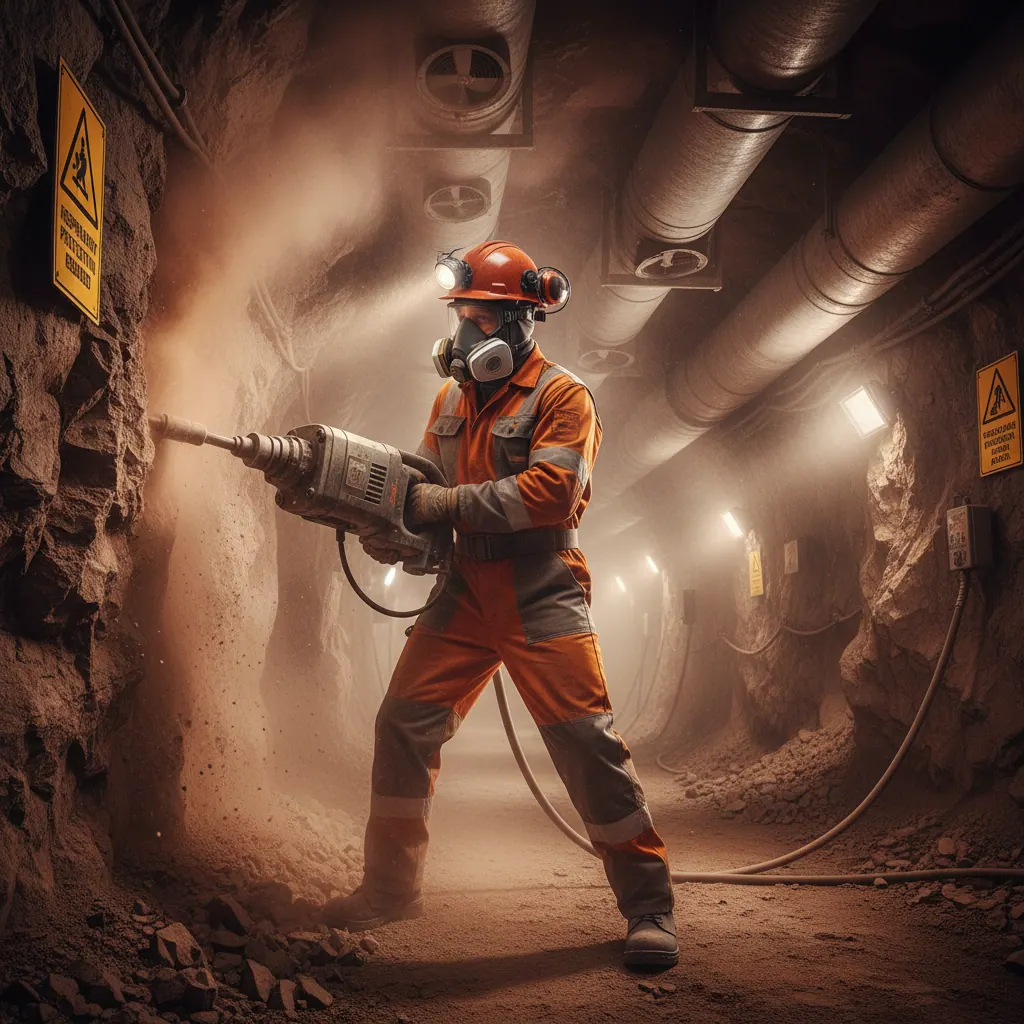
The inhalation of dust and respirable crystalline silica is a primary concern in occupational safety and health, given its ability to cause serious lung diseases, such as silicosis, and the increased risk of lung cancer. In Portugal, Law no. 102/2009, of September 10, amended by Law no. 3/2014, of January 28, establishes the legal framework for the promotion of occupational safety and health, imposing on employers the duty to ensure working conditions that safeguard the physical integrity and health of their employees.
Recently, at a European level and, consequently, with national repercussions, respirable crystalline silica generated in work processes has been explicitly classified as a carcinogenic agent. This change has led to a reinforcement of preventive measures, aiming at more effective worker protection.
Objectives of the new regulation
The main objective of these updates is the prevention of pneumoconioses and other respiratory diseases resulting from exposure to dust inorganics, with a particular focus on silicosis. In addition, it seeks to prevent lung cancer caused by exposure to respirable dust containing crystalline silica. All relevant provisions on the protection of workers against risks related to carcinogenic agents and chemicals are applicable.
Scope of application
This new regulation not only replaces previous standards on protection against dust in extractive industries but also unifies the protection of workers against the risk of inhaling dust and respirable crystalline silica. Thus, it is applicable to all activities covered by the general regulation of basic mining safety standards and other activities with a risk of exposure.
Essential requirements for worker protection
This regulatory review introduces or modifies important requirements to improve worker protection:
- Sampling: Sampling will be carried out at least once every four months of the calendar year, eliminating the possibility of reducing the number of samples.
- Sampling equipment: Samplers and sampling pumps must comply with product conformity assessment procedures for use in specific work environments.
- Constant presence: Technicians responsible for sampling must remain on site for the entire sample collection period.
- Sampling duration: Dust sample collection must extend throughout the workday, unless there is a risk of filter saturation.
- Analysis method: The sampling and analysis method must follow the relevant technical standard for the determination of crystalline silica (respirable fraction) in the air.
- Analysis laboratories: Analyses must be carried out by specialized entities or accredited laboratories in accordance with standard UNE-EN-ISO/IEC 17025.
- Limit values: The occupational exposure limit (OEL) for dust (respirable fraction) remains at 3 mg/m³. However, for respirable crystalline silica dust, the OEL is reduced from 0.1 to 0.05 mg/m³.
- Accidental exposures: For accidental and non-regular exposures to respirable crystalline silica dust (e.g., in repairs or maintenance), the specific provisions on the protection of workers against risks related to exposure to carcinogenic agents apply.
Training and personal protective equipment (PPE)
Worker training is a fundamental pillar in prevention. It must be repeated, at a minimum, annually and whenever substantial changes occur in working conditions. This training must include quantitative fit testing practices for respiratory protective equipment, especially when the effectiveness of this PPE depends on facial fit. Such tests ensure that the equipment provides adequate protection against the inhalation of harmful particles.
Furthermore, a practical guide for the prevention of the risk of exposure to dust and respirable crystalline silica in the work environment is planned, whose criteria and good practices will serve as a mandatory reference in occupational risk assessment.